How to track macros without weighing everything
How to track macros without a food scale: the 4, 4 and 9 math, a worked USDA example, portion shortcuts and how close they get, and a routine you can keep.
On this page
- What are macros, and how do they turn into calories?
- What does a tracked meal look like?
- How do you track macros without a food scale?
- Step 1: Measure your regulars once
- Step 2: Use labels and household measures for the rest
- Step 3: Treat hand rules as rough
- Step 4: Log the fat you can’t see
- Which macro should you watch most closely?
- How do you keep it up past week two?
- What logging looks like in a chat
- FAQ
- Where to go from here
You can track macros without weighing everything. Log every meal as protein, carbs and fat. Estimate portions with household measures and labels, and save your care for the foods that move the numbers most, like cooking oil. A steady estimate you keep up every day tells you more than a perfect log you drop in week two.
For most people, that’s the whole method. The math is simple: protein and carbs carry about 4 calories per gram and fat about 9. The hard part is the logging, so this guide is mostly about making that part quick.
Key takeaways
- Macros are protein, carbs and fat. US food labels are allowed to convert them to calories at 4, 4 and 9 calories per gram.
- You don’t need a scale for every meal. Measure your usual portions once, then estimate with cups, spoons and labels.
- Hand rules like “a fist is a cup” are rough. In one 2016 study, fist estimates missed most shapeless foods, like rice and cereal, by more than half.
- Oil, butter and dressings change the fat number fastest. Log them every time, even as a guess.
- Consistency is the point. Research on self-monitoring links regular logging with progress, so pick a method you’ll still use next month.
What are macros, and how do they turn into calories?
Macros (macronutrients) are the three nutrients that supply most of the calories you eat: protein, carbohydrate and fat. Tracking macros (some people say counting macros) means logging the grams of each, not only the calorie total.
The usual conversion is a convention, set out in the FDA’s food labeling rule (21 CFR 101.9, read October 29, 2026). Among the methods it allows, manufacturers can use “the general factors of 4, 4, and 9 calories per gram for protein, total carbohydrate, and total fat.”
| Macro | Calories per gram | Where you mostly find it |
|---|---|---|
| Protein | 4 | Meat, fish, eggs, dairy, beans, tofu |
| Carbohydrate | 4 | Grains, bread, fruit, starchy vegetables, sugar |
| Fat | 9 | Oils, butter, nuts, cheese, fatty cuts of meat |
Fat carries more than twice the calories per gram, so small amounts of it matter most. That one fact shapes the whole method below.
What does a tracked meal look like?
Here is a plain dinner, built from USDA FoodData Central entries (read October 29, 2026). It’s half a roasted chicken breast, a cup of cooked white rice and a tablespoon of olive oil in the pan.
| Food | Portion | kcal | Protein (g) | Carbs (g) | Fat (g) |
|---|---|---|---|---|---|
| Chicken breast, roasted, meat only | ½ breast (86 g) | 142 | 26.7 | 0 | 3.1 |
| White rice, long-grain, cooked | 1 cup (158 g) | 205 | 4.3 | 44.6 | 0.4 |
| Olive oil | 1 tbsp (13.5 g) | 119 | 0 | 0 | 13.5 |
| Total | 467 | 30.9 | 44.6 | 17.0 |
The portion weights are USDA’s own household measures for each food, so you don’t need the gram figure yourself. “Half a breast, a cup of rice, a tablespoon of oil” is enough to log it.
Now check the math. With 4, 4 and 9: 30.9 g of protein is 124 calories, 44.6 g of carbs is 178, and 17.0 g of fat is 153. That adds up to 455, within about 3 percent of USDA’s 467.
The gap is there partly because USDA’s entries use food-specific conversion factors rather than the round ones. Either way, it’s close enough to steer by.
Look at the oil. One tablespoon is a quarter of the meal’s calories and nearly 80 percent of its fat. Leave it out and the log looks like a much leaner dinner than the one you ate.
How do you track macros without a food scale?
You estimate, and you estimate the same way every day. Four steps cover most meals.
Step 1: Measure your regulars once
Many people eat a fairly short list of foods on repeat. Measure each of those once, with a measuring cup or a kitchen scale if you have one. Start with your usual bowl of cereal, your rice scoop, your pour of oil and your spoon of peanut butter.
After that you know what “my bowl” means. You are not weighing everything; you are calibrating your eye on the foods that make up most of your week.
Step 2: Use labels and household measures for the rest
Packaged food tells you the macros per serving, and the serving is usually a cup, a slice or a piece. For loose foods, think in cups and spoons: a cup of pasta, two tablespoons of hummus, one egg.
Cups and spoons aren’t precise either. They are a shared language, though, so the same lunch gets logged the same way on Monday and Thursday.
Step 3: Treat hand rules as rough
You’ll see guides that say a fist is about a cup and a thumb tip about a tablespoon. They are handy in a restaurant, but they are rough.
A 2016 study in the Journal of Nutritional Science (Gibson and colleagues, 67 adults estimating 42 pre-weighed foods and drinks) tested them. For soft, shapeless foods like rice and cereal (plus muffins), fist estimates missed by more than 50 percent for six of the eight foods tested. None landed within 10 percent.
Cups did a little better on a few items. For those foods, every estimate that was significantly off was too high.
The same study tested finger widths as a ruler on regularly shaped foods and drinks. That put 19 of 24 items (80 percent) within 25 percent of their true weight. The count leaves out fish fillets, chicken breasts and steaks, which it missed by more than half. It’s a fiddly method, and it doesn’t help with a scoop of rice.
The lesson: any eyeball method is an estimate. Use one consistently and you’ll still see your patterns.
Step 4: Log the fat you can’t see
Oil in the pan, butter on toast, dressing on a salad, the mayo in a sandwich. These are easy to forget and, at 9 calories per gram, they move the fat number fastest.
If you’re unsure, log a tablespoon. A guess is closer to the truth than a zero.
Which macro should you watch most closely?
Watch the one that matches your goal, and let the others ride. You don’t have to hit three numbers to the gram every day.
| Your goal | What usually matters most | Why |
|---|---|---|
| Lose weight | Total calories, then protein | The calorie total decides the trend |
| Build muscle | Protein, every day | Muscle is built from training plus enough protein |
| Maintain | Calories over the week, not the day | One big dinner averages out |
| Get healthier | A rough balance and regular meals | Patterns matter more than any single number |
Your actual targets depend on your body, your activity and your goal, so we won’t give you one here. A registered dietitian can set them with you, and if you have a medical condition, start there.
How do you keep it up past week two?
Make logging so quick that it survives a busy day. In our view, most people don’t stop tracking because they stop caring; they stop because searching a database and typing grams gets old.
That matters because consistency is where the benefit lives. A systematic review in the Journal of the American Dietetic Association (Burke and colleagues, 2011) looked at 22 studies of self-monitoring in weight loss, 15 of them on tracking diet. It found a significant link between self-monitoring and weight loss again and again.
The authors rated the evidence as weak, because of how the studies were designed. In all but two studies, the participants were mostly white and mostly women.
So keep the bar low:
- Log right after you eat, not at night from memory.
- Log the meal, not the ingredients, when you can. “Chicken and rice, a tablespoon of oil” is enough.
- Missed a day? Nothing breaks. Log the next meal and carry on.
- Weigh something now and then if you like, to check your eye. That is optional.
If tracking food makes you anxious, or you have a history of disordered eating, macro tracking may not be right for you. That is a good reason to talk to a doctor or a registered dietitian first.
What logging looks like in a chat
We make Getfiit, an AI nutrition coach that lives in WhatsApp. You describe a meal in a message, a voice note or a photo, and it sends back calories, protein, carbs and fat. Here is an illustration of the dinner above, logged in plain words:

The numbers in that exchange are the USDA figures from the table, and a teaspoon of olive oil (4.5 g) is 40 calories in the same USDA entry. When a photo leaves something open, like the oil, the coach asks before it logs. Here is a second illustration, with a breakfast photo:
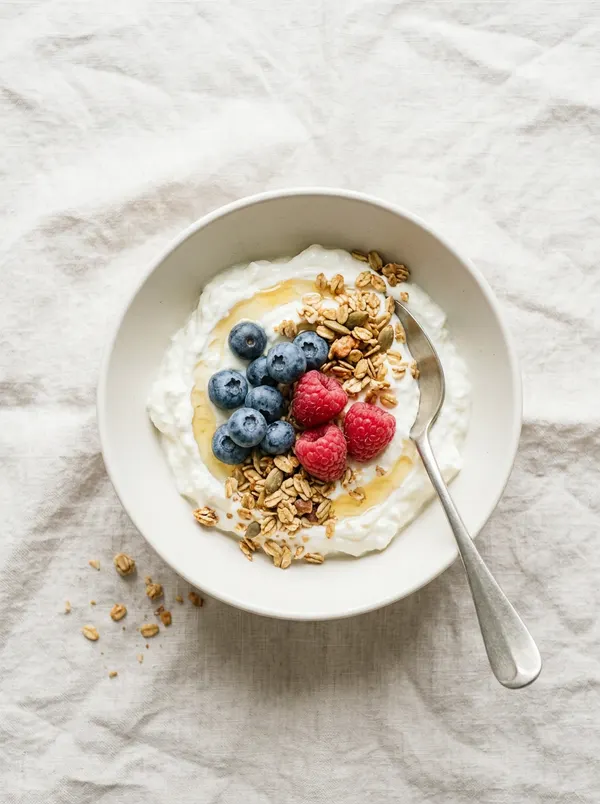
Getfiit sets daily calorie and macro targets from your goal and profile, and you can fix any entry with a reply or the Edit button. As of October 29, 2026 it’s $19.99 a month after a 3-day free trial. See how it works.
FAQ
Do I need a food scale to track macros?
No. A scale helps you learn what your usual portions look like, but cups, spoons and labels are enough day to day. What matters most is logging every meal the same way.
How accurate does macro tracking for weight loss need to be?
Accurate enough to show a trend. Every method estimates, including food labels and photo trackers. A small, steady error still shows you whether your weekly average is moving.
Is it OK to track only protein?
For many people, yes, especially if building muscle is the goal. Just remember that oils and fats still count toward calories even when you aren’t tracking them.
Can I track macros from a photo?
Yes, as an estimate. Photo trackers do best on simple, visible meals and least well on hidden oil and sauces. Our guide to how AI calorie counters work covers what the research says about their accuracy.
What about eating out?
Use the restaurant’s nutrition information if it posts any. If not, log the meal by its parts (“burger, fries, a soda”) and add a tablespoon of oil for anything fried or sautéed. More on common questions about logging.
Where to go from here
Start with tomorrow’s breakfast. Log it as protein, carbs and fat, in whatever way takes you the least time, and keep going for a week before you judge it.
If you’re choosing an app to do it in, see Cronometer vs MyFitnessPal for detailed nutrient tracking, or is Cal AI accurate? for what photo estimates get right and wrong.
This article is general information, not medical advice. Talk to a doctor or a registered dietitian before changing how you eat, especially if you have a health condition, are pregnant, or have a history of disordered eating.
Log your next meal in five seconds.
Getfiit is an AI nutrition coach that lives in WhatsApp. Send a photo, a voice note, or a text, and it replies with calories, macros, and what to do next.
Start on WhatsApp