MyFitnessPal alternatives: what each one offers, and who it suits
MyFitnessPal alternatives compared: what each offers free, what it costs, who it suits, and how to pick one you'll still use in two weeks.

On this page
- Why do people look for a MyFitnessPal alternative?
- The alternatives at a glance
- What each MyFitnessPal alternative does well
- Cronometer, for detail
- Lose It, for a goal and some company
- MyNetDiary, for free features
- FatSecret, for logging for free
- MacroFactor, for targets that adjust
- Cal AI, for photos first
- Noom, for a program
- Which free alternative to MyFitnessPal covers the most?
- What do people who switch have in common?
- How to switch without starting over
- Where does Getfiit fit?
- Frequently asked questions
- Your next step
If you’re looking for a MyFitnessPal alternative, the food database probably isn’t the problem. Usually it’s one of three things: more features without paying, less typing per meal, or a different approach altogether.
So the right alternative depends on the reason. Want a free barcode scanner? Cronometer and MyNetDiary include one. Want less typing? Look at photo and voice logging. Want targets that adjust as you go? MacroFactor is built for that. Every feature and price below comes from each company’s own site or official App Store listing, read on October 29, 2026.
Key takeaways
- MyFitnessPal’s free plan is search and log. As of October 29, 2026, barcode scan, meal scan, voice log and custom macro goals are Premium, at $19.99 a month or $79.99 a year.
- Several alternatives give away what MyFitnessPal charges for. Cronometer and MyNetDiary include a barcode scanner free, and FatSecret lists photo recognition and barcode scanning in its free app.
- Cal AI isn’t a clean break: MyFitnessPal announced in March 2026 that it had bought it, though it runs as a separate app.
- In a 2015 US survey, the most common reason people gave for dropping a health app was that entering data took too much time. Pick the app that makes your normal day quickest to log.
Why do people look for a MyFitnessPal alternative?
Usually because the free plan does less than they expected. MyFitnessPal’s home page says free members “can do a simple food search”, while Premium adds the “time-saving tools”: scanning a barcode, or individual foods with the camera.
As of October 29, 2026, its Premium page lists two rows as free: nutrition and weight tracking, and exercise tracking. Six are Premium only: barcode scan and meal scan, voice log, macro tracking with custom goals, ad-free logging, intermittent fasting, and food insights.
Premium costs $19.99 a month or $79.99 a year, with a 7-day free trial if you’ve never had Premium before.
That matters because the paid features are the ones that save time. And time is where people give up.
A 2015 national survey in JMIR mHealth and uHealth (PMID 26537656) asked 1,604 US adults with mobile phones about health apps. Of the 934 who had downloaded one, 427 said they had downloaded health apps they no longer used. Their most common reasons are below.
The survey wasn’t limited to food trackers, and it’s from 2015. But its authors noted that burdensome manual recording is “especially prominent in calorie- and nutrition-tracking apps.”
Logging also tends to fade over months. In a 2013 pilot trial in J Med Internet Res (PMID 23587561), 128 UK adults kept a food diary for six months. Each used an app, a website or paper.
The app group kept going longest, but self-monitoring declined in all three groups. By month six, 7 people in the app group (16 percent) were still recording every day.
So the useful question isn’t “which app has the most features”. It’s “which app makes my usual day fastest to log”.
The alternatives at a glance
As of October 29, 2026, this is what each company says about its own app. “Not stated” means the official site and App Store listing name no plan price, only a list of App Store purchases with no billing periods. In other columns, “Not stated” means the company’s pages don’t say.
| App | Free plan includes | Paid plan adds | Price, per the company | Built for |
|---|---|---|---|---|
| MyFitnessPal | Food search, nutrition, weight and exercise tracking | Barcode and meal scan, voice log, custom macro goals, no ads | $19.99 a month or $79.99 a year; 7-day trial | A huge database and many device connections |
| Cronometer | Food, macro, vitamin and mineral tracking; unlimited barcode scanning | Photo and voice log, macro scheduler, fasting timer | Gold: $10.99 a month, or $59.99 a year | Detailed nutrients from verified data |
| Lose It | Calorie tracking, a weight loss plan, community | Barcode scanner, photo and voice logging, macro tracking | Not stated | A plan built around a weight goal |
| MyNetDiary | Food diary, barcode scanner, voice logging, macro tracking | Meal Scan photos, adaptive calorie targets, an AI coach | Not stated | A lot of free logging, with no ads |
| FatSecret | Food diary, photo recognition, barcode scanner | Dietitian meal plans, water tracking, extra planning tools | Not stated clearly (several prices listed) | Logging for free |
| MacroFactor | No free plan | Adaptive macro targets, photo, voice and barcode logging | $11.99 a month, $47.99 a half year, $71.99 a year; 7-day trial | People who like data and want weekly adjustments |
| Cal AI | Not stated; food scan results need a subscription | Food scan results (photo); other limits not stated | Not stated; 3-day trial | Photo-first logging |
| Noom | Not stated; it’s a program, not a tracker | A behavior-change program with lessons and AI food logging | “As low as $17 a month”, based on a $209 annual web plan | A structured program, not just a log |
Sources: MyFitnessPal Premium; Cronometer’s free plan and Gold pages; the official US App Store listings for Lose It, MyNetDiary, FatSecret, MacroFactor, Cal AI and Noom; and calai.app. Android versions may differ.
What each MyFitnessPal alternative does well
Each section says why people pick that app, in the company’s own words where it helps, and who it suits less.
Cronometer, for detail
Cronometer says its free Basic account covers “everything you need to track your food, track your macros and track your vitamins and minerals”. Unlimited barcode scanning is free too, which is one of the main things MyFitnessPal charges for.
Its Gold page cites “a database of over 1M lab-analyzed or verified foods” and up to 95 nutrients. If you care about iron, fiber or vitamin D as much as calories, this is the app built for it.
The trade-off is that detail takes attention. Photo and voice logging are in Gold. For the full head-to-head, see Cronometer vs MyFitnessPal.
Lose It, for a goal and some company
Lose It’s free plan includes calorie tracking, a weight loss plan and community support. Its App Store listing also describes a calorie schedule that lets you plan to eat more on weekends, which suits people whose Saturdays don’t look like their Tuesdays.
Its paid plan is close to MyFitnessPal’s: the barcode scanner, photo and voice logging, and macro tracking are all Premium. So it’s a change of feel more than a change of method. See Lose It vs MyFitnessPal for the detail.
MyNetDiary, for free features
MyNetDiary’s App Store listing gives a long free list: a food diary with search, favorites and copy-from-day, a barcode scanner, voice logging and macro tracking. It also says “no ads, no account required”.
Premium adds Meal Scan for photos and adaptive targets that update calories and macros weekly. A higher tier adds an AI coach. If you’re leaving MyFitnessPal because its scanner is a Premium feature, this one is worth a look.
FatSecret, for logging for free
FatSecret’s listing says it plainly: “Best of all, fatsecret is free.” Photo recognition and a barcode scanner appear in its main feature list, not its Premium list.
Premium adds dietitian meal plans, water tracking and more planning tools. Its listing shows several subscription prices, so check the offer in the app before you pay.
MacroFactor, for targets that adjust
MacroFactor’s pitch is the target, not the log. Its site says it “finds your true caloric burn and auto-adjusts your macro plan every week”.
Its App Store listing also promises a calm tone: no “warnings, red numbers, or shaming” when you go over a target. It logs by barcode, photo or speech. There’s no free plan: as of October 29, 2026, it’s $11.99 a month or $71.99 a year after a 7-day trial. It suits people who already like data.
Cal AI, for photos first
Cal AI starts from the camera: “Snap a photo, scan a barcode, or describe your meal.” Its listing says food scan results need a subscription. Its own FAQ says it’s “about 80% accurate”, and that it can’t import your MyFitnessPal history yet.
One thing to know: on March 2, 2026, MyFitnessPal announced in a press release that it had bought Cal AI. It said Cal AI would keep running as its own product. For how photo estimates hold up, see is Cal AI accurate?
Noom, for a program
Noom is a different kind of product. Its listing calls it a weight loss program built on “lessons and science-backed tools”, with daily lessons on habits and AI food logging. It’s for people who want a structure to follow, not just a place to log.
As of October 29, 2026, its listing says plans start “as low as $17 a month”, based on a $209 annual web plan.
Which free alternative to MyFitnessPal covers the most?
On their own descriptions, MyNetDiary, Cronometer and FatSecret give away the most.
- MyNetDiary: barcode scanner, voice logging and macro tracking, free and without ads.
- Cronometer: unlimited barcode scanning, macros and micronutrients, free.
- FatSecret: photo recognition and a barcode scanner in its free app.
Lose It’s free plan, like MyFitnessPal’s, is mainly search and log. MacroFactor has no free plan, and Cal AI’s photo results need a subscription.
A free plan only helps if you open it. Try the one whose free logging method matches how you’d actually log: scanning packages, talking, or taking photos.
What do people who switch have in common?
Across these apps, most of the newer selling points aren’t about the database. They’re about how quickly a meal goes in. Barcode scanners, photos, voice notes, saved meals and copy-from-day all cut the same step: searching and picking entries.
That fits the research. In a 2019 study in Obesity (PMID 30801989), 142 adults in a 24-week online weight program logged their food on the web. They spent an average of 23.2 minutes a day on it in month one and 14.6 in month six.
Those who lost at least 5 percent of their weight logged in more often per day than those who didn’t. Among people still logging at month six, how often they logged was linked to results; minutes spent weren’t.
Our view: a quick log you keep beats a thorough log you drop. When you compare apps, time a normal day, not a feature list.
How to switch without starting over
You don’t need to rebuild your history to switch. A few habits make the first two weeks easier:
- Log breakfast and dinner only for the first week. Add lunch once the habit holds.
- Save your usual meals so they take one tap.
- Estimate when you’re unsure. A rough entry beats a blank day. For portion shortcuts, see how to track macros without weighing everything.
- Give it two weeks before you judge it. The first days are usually the slowest.
Tracking isn’t right for everyone. If you have a history of disordered eating, talk to a doctor or a registered dietitian before you start counting again.
Where does Getfiit fit?
We make Getfiit, so weigh this section with that in mind. It’s an AI nutrition and fitness coach that lives in WhatsApp. You send a photo, a voice note or a sentence, and it replies with calories, protein, carbs and fat. If WhatsApp is already on your phone, there’s nothing new to install.
Here’s an illustration of a photo log. It’s an example, not a measured result:
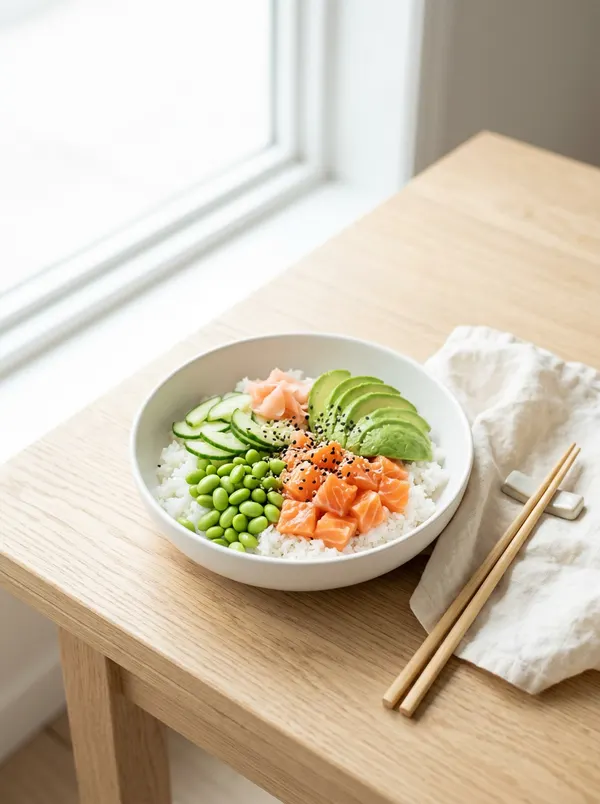

It doesn’t scan barcodes, connect to a watch, or go as deep on micronutrients as Cronometer. If you need any of those, pick one of the apps above.
Getfiit is for people who stopped logging because of the typing. Its photo counts are estimates, and it asks when something is unclear, like the dressing above. For how photo tracking works, see AI calorie counters, and how accurate they are.
As of October 29, 2026, Getfiit costs $19.99 a month after a 3-day free trial, and you can cancel anytime. See how it works.
Frequently asked questions
Which MyFitnessPal alternative should I pick?
There isn’t one best pick; it depends on why you’re leaving. For free barcode scanning, try Cronometer or MyNetDiary. For detailed nutrients, Cronometer. For targets that adjust weekly, MacroFactor. For less typing, a photo or voice logger.
Is there a free alternative to MyFitnessPal?
Yes. As of October 29, 2026, MyNetDiary, Cronometer and FatSecret all have free plans that include a barcode scanner, which MyFitnessPal keeps in Premium. MyNetDiary’s free plan also includes voice logging.
What are some apps like MyFitnessPal?
Lose It is the closest in feel: a database tracker with a free plan and a similar Premium list. Cronometer, MyNetDiary and FatSecret also work by searching a food database. MacroFactor and Cal AI take different approaches.
Can I move my MyFitnessPal history to another app?
It depends on the app. Cal AI’s FAQ says it doesn’t support imports from MyFitnessPal yet. Check the new app’s help pages before you assume. Most people do fine starting fresh with today’s meals.
Is Cal AI owned by MyFitnessPal?
Yes. MyFitnessPal announced on March 2, 2026 that it had acquired Cal AI, and said Cal AI would continue as a standalone product.
Your next step
Write down the one reason you’re leaving MyFitnessPal. Then pick the app above that fixes that reason, and log breakfast and dinner in it for two weeks. Still opening it on day 14? You’ve found your tracker. You can also browse our other tracker comparisons.
This article is general information, not medical advice. Talk to a doctor or a registered dietitian before changing how you eat, especially if you have a health condition, are pregnant, or have a history of disordered eating.
Log your next meal in five seconds.
Getfiit is an AI nutrition coach that lives in WhatsApp. Send a photo, a voice note, or a text, and it replies with calories, macros, and what to do next.
Start on WhatsApp