Cal AI vs MyFitnessPal: a photo or a food search
Cal AI vs MyFitnessPal: how each logs a meal, what's free, what each costs as of November 2026, and which one fits the way you eat.
On this page
- Which one should you pick?
- How do Cal AI and MyFitnessPal differ at a glance?
- How does logging a meal work in each app?
- Cal AI: a photo first
- MyFitnessPal: a search first
- The trade-off: speed or checking
- What does Cal AI do best?
- What does MyFitnessPal do best?
- Does it matter that MyFitnessPal owns Cal AI?
- What does research say about each one?
- Which one is easier to keep using?
- Where does Getfiit fit?
- Frequently asked questions
- Your next step
Cal AI vs MyFitnessPal comes down to how you want to log a meal. Cal AI is built around a photo: you snap your plate and it estimates the calories. MyFitnessPal is built around a food search: you look each item up in a very large database, and its photo and voice tools are paid extras.
So which should you use?
Pick Cal AI if you’ll only log when it takes one photo, and you’re fine paying after a short trial. Pick MyFitnessPal if you want a free plan, a huge database to check entries against, and syncing with a long list of devices.
Every feature and price below comes from each company’s own site and official app store listings, read on November 1, 2026. We didn’t test either app ourselves.
Key takeaways
- Cal AI starts from a photo. MyFitnessPal starts from a search. Both also scan barcodes, but in MyFitnessPal that’s a Premium tool.
- MyFitnessPal has a free plan; Premium is $19.99 a month or $79.99 a year, with a 7-day trial for first-timers. Cal AI offers a 3-day free trial, and its App Store listing says scan results “require a subscription”.
- MyFitnessPal bought Cal AI in March 2026. Its press release says Cal AI “will continue to operate as a standalone product”.
- No published study we found has tested Cal AI. Research on photo tracking in general finds it names foods well and estimates calories less well.
- The better tracker is the one you still use next month. If a search is what makes you quit, a photo is worth trying.
Which one should you pick?
| If you… | Lean toward |
|---|---|
| Want to log by photo and little else | Cal AI |
| Want to start free and maybe never pay | MyFitnessPal |
| Want to check entries against a very large database | MyFitnessPal |
| Want photo logging for free | Neither; in both it’s a paid feature |
| Want to sync a long list of watches and scales | MyFitnessPal |
| Quit trackers because searching took too long | Cal AI, or see where Getfiit fits |
The rest of the post gives the reasons, so you can check them against how you eat.
How do Cal AI and MyFitnessPal differ at a glance?
As of November 1, 2026, this is what each company says about its own app.
| Cal AI | MyFitnessPal | |
|---|---|---|
| Main way to log | A photo of your meal | A search of its food database |
| Other ways to log | Barcode scan, describing a meal, a food search | Barcode scan, Meal Scan (photos), Voice Log |
| Free plan | None described; a 3-day free trial | Yes: food search, calories, macros, weight and exercise |
| What’s paid | Food scan results “require a subscription” | Barcode Scan, Meal Scan, Voice Log, custom macro goals, ad-free logging |
| Price (US) | Not stated on its site; App Store “Unlimited” purchases from $2.99 to $29.99, with no billing period shown | Premium $19.99 a month or $79.99 a year; Premium+ $24.99 a month or $99.99 a year |
| Free trial | 3 days | 7 days, for first-time Premium users |
| Food database | “over 1 million foods” | “20.5M Foods” (the same page also says “over 18 million”) |
| Health apps and devices | Apple Health and Google Fit | “40+ apps and devices” (the Premium page says “More than 35”) |
| Accuracy, in its own words | “about 80% accurate” | No single figure; see is MyFitnessPal accurate? |
| Platforms | iPhone (iOS 18 or later) and Android 10 or later | iPhone and Android |
Sources: Cal AI’s home page, FAQ, terms, US App Store listing and Google Play listing; MyFitnessPal’s home page, Premium page, Premium+ page and US App Store listing. Where a company’s own pages disagree, the table shows both figures.
How does logging a meal work in each app?
This is the real difference between them, so it’s worth a minute.
Cal AI: a photo first
Cal AI’s home page sums it up: “Snap a photo, scan a barcode, or describe your meal and get instant calorie and nutrient info.” For a photo, it says your phone’s depth sensor “calculates food volume”, and its AI then breaks the meal down into calories, protein, carbs and fat.
Its App Store listing describes three steps: answer lifestyle questions to build your plan, snap a photo, get your breakdown. The FAQ adds that you can also log by barcode or “manual search”, and the home page says its database holds “over 1 million foods”.
The catch is the one every photo tracker shares: a photo gives an estimate. Cal AI says so itself. Its FAQ calls the app “about 80% accurate”, and its terms describe all calorie estimates as “automated approximations” that “may be incomplete or inaccurate”.
MyFitnessPal: a search first
On MyFitnessPal’s free plan, you search. Its home page says: “Free members can do a simple food search from their app’s home screen.”
Premium adds the shortcuts. Meal Scan “uses your camera to recognize everything on your plate”, Voice Log “lets you simply tell the app what you ate”, and Barcode Scan reads packaged foods. The Premium page puts it plainly: those tools “let you skip the manual food search”.
The strength of the search is the database behind it. MyFitnessPal’s home page cites “20.5M Foods”, and the same page’s Q&A says “over 18 million”. Either way, it’s far larger than Cal AI’s count of “over 1 million foods”.
The trade-off: speed or checking
A photo is quicker to send. A search is easier to check. With a photo, the app decides what’s on the plate and how much. With a search, you pick the entry and the portion yourself, which takes longer but leaves you in charge of each number.
Neither removes the blind spot that matters most: oil, butter and sauces you can’t see. For how photo estimates work and where they miss, see how AI calorie counters work.
What does Cal AI do best?
Speed of the first step. If you’ve quit a tracker because each meal meant five searches, a single photo is the appeal. Cal AI also scans barcodes, so packaged food doesn’t have to be a guess.
It’s honest about accuracy, too. Saying “about 80% accurate” is more useful than a promise of precision, and it fits the research on photo tracking in general, which finds photo estimates approximate (below).
The trade-offs are cost and range. None of Cal AI’s pages describe a free plan where logging works, and it doesn’t publish a price on its site.
Its App Store listing shows “Unlimited” purchases from $2.99 to $29.99, with no billing periods labeled. So check the price in the store before your trial ends.
It also can’t bring your history with you. Asked whether it imports from MyFitnessPal, its FAQ says: “Not yet.” For more on what it does and costs, see our Cal AI review.
What does MyFitnessPal do best?
Range, and a free way in. The free plan logs food by search and tracks calories and macros, and you can use it without ever paying. If you eat a wide range of branded or restaurant foods, the size of the database helps.
It also connects to more devices. Its home page lists Apple Watch, Fitbit, Garmin, Samsung Health, Google Fit, Health Connect and smart scales. Cal AI’s FAQ names Apple Health and Google Fit.
Its daily goal is set from the Mifflin-St Jeor equation, then “500 calories per pound of weight change per week desired” is added or subtracted, per its home page. It also won’t let you set a weight goal below a certain ratio.
The shortcuts cost extra. If you want to log by photo or voice in MyFitnessPal, that’s Premium at $19.99 a month or $79.99 a year, as of November 1, 2026. Premium+ ($24.99 a month or $99.99 a year) adds a meal planner and recipes. For a wider look at the field, see MyFitnessPal alternatives.
Does it matter that MyFitnessPal owns Cal AI?
Not much for your choice today. MyFitnessPal announced on March 2, 2026 that it had bought Cal AI. The release says Cal AI “will continue to operate as a standalone product”, and that MyFitnessPal plans to keep investing in its development and marketing.
The release doesn’t announce merging the apps, the databases or the accounts. So for now they’re two separate apps with two separate subscriptions. Mike Fisher, MyFitnessPal’s chief executive, framed it this way in the release: “no single product can serve every consumer.”
What does research say about each one?
We found no published study that tested Cal AI. A PubMed search for “Cal AI” on November 1, 2026 returned no study of the app. What exists is research on photo tracking in general, and on database apps like MyFitnessPal.
A 2024 study in Nutrients (PMID 39125452) screened Australia’s app stores and tested apps against set 3-day menus. MyFitnessPal’s photo feature named the foods in a picture best of the seven photo-recognition apps tested, at 97% (38 of 39 items). That’s naming foods, not counting calories. On calories, the authors concluded that “automatic energy estimations from AI-enabled food image recognition were inaccurate.”
The same study found errors in typed logging too. For a Western-style menu, 14 of the 16 manual logging apps came out higher on energy, by a mean of 1,040 kJ (about 250 calories). For an Asian-style menu, 13 of 16 came out lower, by a mean of 1,520 kJ (about 360 calories). Cal AI wasn’t in the study.
A 2026 study in Nutrients (PMID 41901141) tested ten AI tools on 15 weighed hospital meals. The three best tools had an average energy bias of 1% to 3% under the weighed values, but overestimated fat by 23.6% to 30.4%. Cal AI wasn’t tested there either.
So a photo isn’t exact, and neither is a search. Each gives an estimate. What changes your results more is whether you log at all.
Which one is easier to keep using?
The one that takes less effort, for most people. People log less as the weeks go by, and the time each entry takes is part of why. We look at that research in food diary apps.
Evidence on photos versus typing is thin. In a small 2014 study (PMID 24876568), 18 university students used one food log with photo help and the same log with text only, for a month each. Photo logging got higher average scores on ease of use and intention to continue, but the number of meals recorded didn’t differ significantly. It’s a small, older study, so read it as a hint, not proof.
A few habits help in either app:
- Log at the table, not at night from memory.
- Add the oil. Neither a photo nor a quick search sees what went into the pan.
- Save the meals you repeat, so breakfast takes one tap.
Tracking isn’t right for everyone. If you have a history of disordered eating, talk to a doctor or a registered dietitian before you start counting.
The better tracker is the one you still open on a busy Thursday in week five.
Where does Getfiit fit?
We make Getfiit, so weigh this section with that in mind. It’s an AI nutrition and fitness coach that lives in WhatsApp, so there’s no new app to install. You send a photo, a voice note or a sentence, and it replies with calories, protein, carbs and fat.
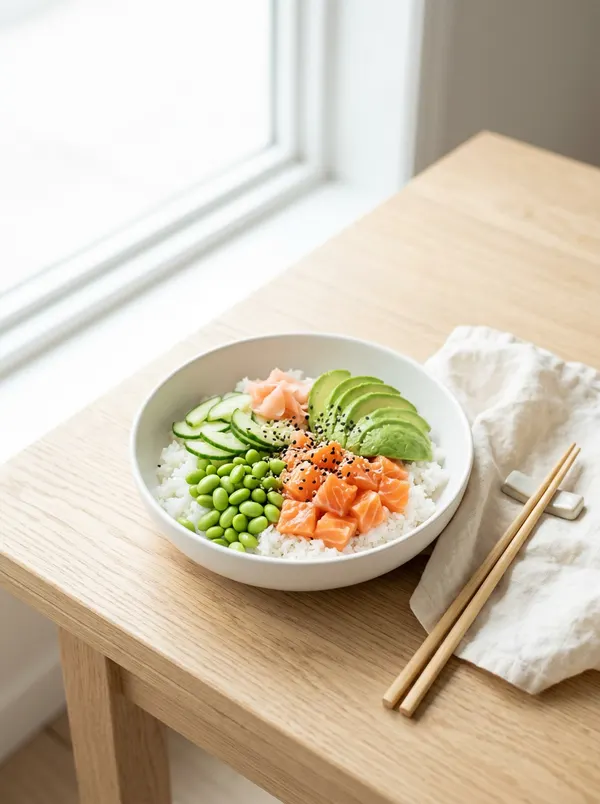
It shares Cal AI’s idea that a photo beats a search. The difference is where it lives, and that a coach replies: when a photo leaves something open, like oil or butter, it asks before it logs. Here’s an illustration of a log, not a measured result:


It doesn’t scan barcodes, and it doesn’t sync with a watch or a scale. If you want the largest database and the longest device list, that’s MyFitnessPal. If you want a photo tracker as its own app, that’s Cal AI.
As of November 1, 2026, Getfiit costs $19.99 a month after a 3-day free trial, and you can cancel anytime. See how it works.
Frequently asked questions
Is Cal AI better than MyFitnessPal?
Not across the board. Cal AI suits someone who wants to log by photo and little else. MyFitnessPal suits someone who wants a free plan, a much bigger database and more device syncs. We found no study that compared the two directly.
Is Cal AI free?
Not for logging, as far as its own pages show. As of November 1, 2026, it offers a 3-day free trial, and its App Store listing says food scan results “require a subscription”. See our Cal AI review for more.
Does MyFitnessPal have photo logging like Cal AI?
Yes. MyFitnessPal’s Meal Scan uses your camera to recognize what’s on your plate, but it’s a Premium feature ($19.99 a month or $79.99 a year as of November 1, 2026). The free plan logs by search.
Is Cal AI part of MyFitnessPal now?
MyFitnessPal owns it, since March 2026, but Cal AI still runs as its own app with its own subscription. The press release says it “will continue to operate as a standalone product”.
Is Cal AI accurate?
Its own FAQ says “about 80% accurate”. We found no independent study of Cal AI itself. For the details, see is Cal AI accurate?
Your next step
Pick one and use its trial on an ordinary week, not your best one. Log every meal you can, and notice which ones you skipped and why. If the search was the reason, try the photo; if the photo felt like a guess, try the search. Browse our other tracker comparisons or see a faster way to log.
This article is general information, not medical advice. Talk to a doctor or a registered dietitian before changing how you eat, especially if you have a health condition, are pregnant, or have a history of disordered eating.
Log your next meal in five seconds.
Getfiit is an AI nutrition coach that lives in WhatsApp. Send a photo, a voice note, or a text, and it replies with calories, macros, and what to do next.
Start on WhatsApp